October 1, 2026
October 1, 2026
Nigeria at 66: Are Anti-Fraud Policies Making Us Safer?
As Nigeria marks 66 years of independence, stronger financial safeguards and new security policies offer reasons for hope. But for families facing scams, kidnapping and stolen savings, progress must mean more than announcements. It must mean protection they can feel.
As Nigeria marks 66 years of independence, stronger financial safeguards and new security policies offer reasons for hope. But for families facing scams, kidnapping and stolen savings, progress must mean more than announcements. It must mean protection they can feel.
This Independence Day, we examine the Tinubu administration’s response to fraud and crime, weighing documented reforms against the everyday safety and trust Nigerians deserve.
Independence Must Also Mean the Freedom to Feel Safe
For a trader receiving payment, security means knowing that a credit alert is genuine. For a parent, it means a child returning safely from school. For a young Nigerian saving towards rent, it means an investment platform cannot disappear with years of sacrifice.
These are ordinary expectations of citizenship.
As Nigeria celebrates its 66th Independence Day, the government’s response to fraud and crime deserves a fair assessment: recognition where reforms have delivered, scrutiny where implementation remains uncertain, and attention to the people those policies exist to protect.
President Bola Tinubu’s administration has strengthened aspects of financial regulation, advanced data protection and announced additional security measures. Some results are measurable. Others remain commitments whose impact must still be demonstrated.
The central question is whether these changes make it harder to commit crime—and easier for victims to obtain help.
A Fair Assessment Must Recognise What Government Inherited
Nigeria’s anti-fraud infrastructure did not begin with the current administration.
The Bank Verification Number system, existing financial-crime agencies and earlier anti-money-laundering measures predate it. The CBN’s own account of BVN regulation records requirements and reforms stretching back well before 2023. Source: Central Bank of Nigeria
That distinction matters. Continuing an effective policy is valuable governance. But an honest assessment should separate inherited institutions, new measures and results achieved through the work of regulators, investigators, banks, courts and international partners.
Financial-Crime Reform Has Produced a Significant International Result
One of the clearest achievements during this administration came on 24 October 2025, when the Financial Action Task Force removed Nigeria from its list of jurisdictions under increased monitoring, commonly called the FATF grey list.
FATF recognised improvements including:
Stronger supervision of financial institutions and other regulated businesses.
Better access to information about the people who ultimately own companies.
Greater use of financial intelligence in investigations.
Increased money-laundering and terrorist-financing investigations and prosecutions.
Improved international cooperation.
These findings provide external recognition of institutional progress. Nigeria had entered increased monitoring in February 2023, before Tinubu took office. Source: FATF’s October 2025 assessment
For Nigerians, the importance is practical: criminals depend on moving, concealing and spending illicit money. Stronger financial controls can make those activities harder.
However, removal from the grey list is not a declaration that fraud has ended. It recognises improvements in specific financial-crime controls, rather than certifying every transaction or institution as safe.
Stronger Bank Identity Checks: Useful Protection With Limits
In December 2023, the CBN tightened identification requirements for bank accounts and wallets.
Its rules required BVN or NIN for individual Tier 1 accounts and wallets, while individual Tier 2 and Tier 3 accounts and wallets required both. The measures also strengthened electronic validation of identity information during account opening. Source: CBN
The policy addresses a basic weakness criminals exploit: financial accounts whose users cannot be reliably identified.
Yet identity checks are only one defence. A properly identified customer can still participate in fraud. A legitimate account can also be compromised or used to receive money on someone else’s behalf.
For an online buyer, an account name matching a seller’s name is helpful information. It is not sufficient evidence that the goods exist or will be delivered.
Effective fraud prevention requires banks to combine identification with transaction monitoring, responsive complaints handling and prompt investigation.
Reported Payment-Fraud Losses Fell, But the Numbers Need Context
There is an encouraging result in Nigeria’s payment system.
Figures published by the Nigeria Inter-Bank Settlement System show reported fraud losses falling from ₦52.26 billion in 2024 to ₦25.85 billion in 2025; roughly half the previous year’s amount. Source: NIBSS
That improvement deserves recognition. So does the fact that ₦25.85 billion remains a substantial loss.
These figures concern the payment-fraud reporting discussed by NIBSS. They should not be treated as a count of every scam, corruption offence or violent crime in Nigeria. Nor does a year-to-year decline, by itself, establish how much improvement came from any single government policy.
The next standard should be sustained reductions, faster intervention and clearer information about how much stolen money reaches victims again.
Investment-Fraud Rules Must Reach Nigerians Before Scammers Do
The Investments and Securities Act 2025, signed during the Tinubu administration, updated Nigeria’s capital-market framework. The legislation expressly addresses prohibited schemes, including Ponzi and pyramid schemes. Sources: SEC investor information, Investments and Securities Act 2025
But legislation must be supported by prevention.
In May 2026, the Securities and Exchange Commission warned about unregistered investment schemes being promoted through WhatsApp, Instagram, Telegram and other platforms. It urged Nigerians to check operators’ registration and avoid unrealistic or guaranteed returns. Source: SEC public warning
Consider a familiar scenario: someone joins an investment group because a colleague received an early payout. Screenshots circulate. Members are encouraged to recruit relatives. The pressure to invest grows.
An early payout does not establish legitimacy. Neither does a professional website or a company-registration certificate establish authorisation to offer regulated investments.
The government’s preventive work must reach people in the same places these schemes recruit them: social platforms, workplaces, markets and community networks.
Data Protection Is Part of Fraud Prevention
President Tinubu signed the Nigeria Data Protection Act on 12 June 2023, giving Nigeria a stronger statutory framework for protecting personal information. Source: NDPC annual report
The connection to fraud is direct. Personal information can help an impersonator sound convincing, target a victim or attempt account recovery.
The Act establishes obligations around personal-data processing and avenues for redress. The Nigeria Data Protection Commission’s mandate includes promoting lawful handling of information and safeguarding individuals’ rights. Source: NDPC
The policy test is practical: do organisations collect only what they need, protect what they hold and respond properly when something goes wrong?
Citizens should not have to trade away their privacy to participate in the digital economy.
Physical Security Requires More Than Recruitment Announcements
Fraud prevention cannot be separated from the wider demand for safety.
On 26 November 2025, President Tinubu announced a nationwide security emergency, authorised additional military and police recruitment, and directed the deployment of trained forest guards. The announcement raised the planned police recruitment total to 50,000 and addressed redeployment from VIP protection duties. Source: State House announcement
In August 2026, the President also ordered preparation of a national threat assessment and a rolling five-year defence operations plan, with submission required within 90 days. As of this Independence Day, that directive represents planning work—not evidence of completed results. Source: State House directive
More personnel and better coordination can support security. Their value depends on training, equipment, welfare, intelligence, deployment and accountability.
Nigerians should be able to see whether these measures produce safer journeys, fewer attacks, faster responses and better protection for vulnerable communities. An authorised recruitment figure is not the same as trained officers serving effectively on the ground.
Fighting Cybercrime Must Protect Democratic Rights
A government’s response to crime must also respect the freedoms independence is meant to secure.
Nigeria amended its Cybercrimes Act in 2024, narrowing the controversial Section 24. Nevertheless, the Committee to Protect Journalists documented further journalist detentions on cybercrime allegations in 2025 and raised concerns about continuing use of the law against the press. Source: CPJ
Those concerns belong in any serious assessment of anti-crime policy.
Journalists, whistleblowers and citizens can help expose misconduct. Investigations must distinguish criminal conduct from legitimate reporting and criticism, while respecting evidence, due process and access to legal representation.
Public trust grows when enforcement is both effective and fair.
What Nigerians Should Demand Before the Next Independence Day
A credible anti-fraud and crime strategy should publish results citizens can understand:
Victim outcomes: How many complaints resulted in assistance, recovery or restitution?
Response times: How quickly do institutions act after a fraud or security report?
Case outcomes: How many investigations reach court, and how are they resolved?
Public safety: Are serious offences declining in affected communities?
Accountability: Are officials and influential suspects investigated under the same standards?
Rights protection: Can people report wrongdoing without intimidation?
Arrest totals and recovery announcements provide information. They become more meaningful when accompanied by clear time periods, case outcomes and explanations of what happened to recovered assets.
Safer Habits Still Matter - Without Blaming Victims
Government and institutions carry responsibilities that citizens cannot replace. Personal precautions remain useful alongside those duties.
Before paying, investing or arranging a meeting:
Independently check identities and relevant authorisations.
Confirm investment operators through official SEC channels.
Verify payment in your own banking app rather than trusting screenshots.
Keep passwords, PINs and OTPs private.
Preserve evidence and report suspected fraud promptly through official channels.
Conclusion
At 66, Nigeria has reasons to recognise progress in financial-crime controls, payment security and data protection. The Tinubu administration should receive credit for documented improvements and face scrutiny over implementation, victim support, public safety and respect for rights.
Profiled Nigeria’s verification tools and SecureMeet solution support the everyday effort to combat fraud through identity checks and safer interactions. Their role complements the duty of public institutions to prevent crime, investigate fairly and protect citizens.
This Independence Day, the standard should be clear: Nigerians deserve policies that make trust safer, justice accessible and daily life less fearful.
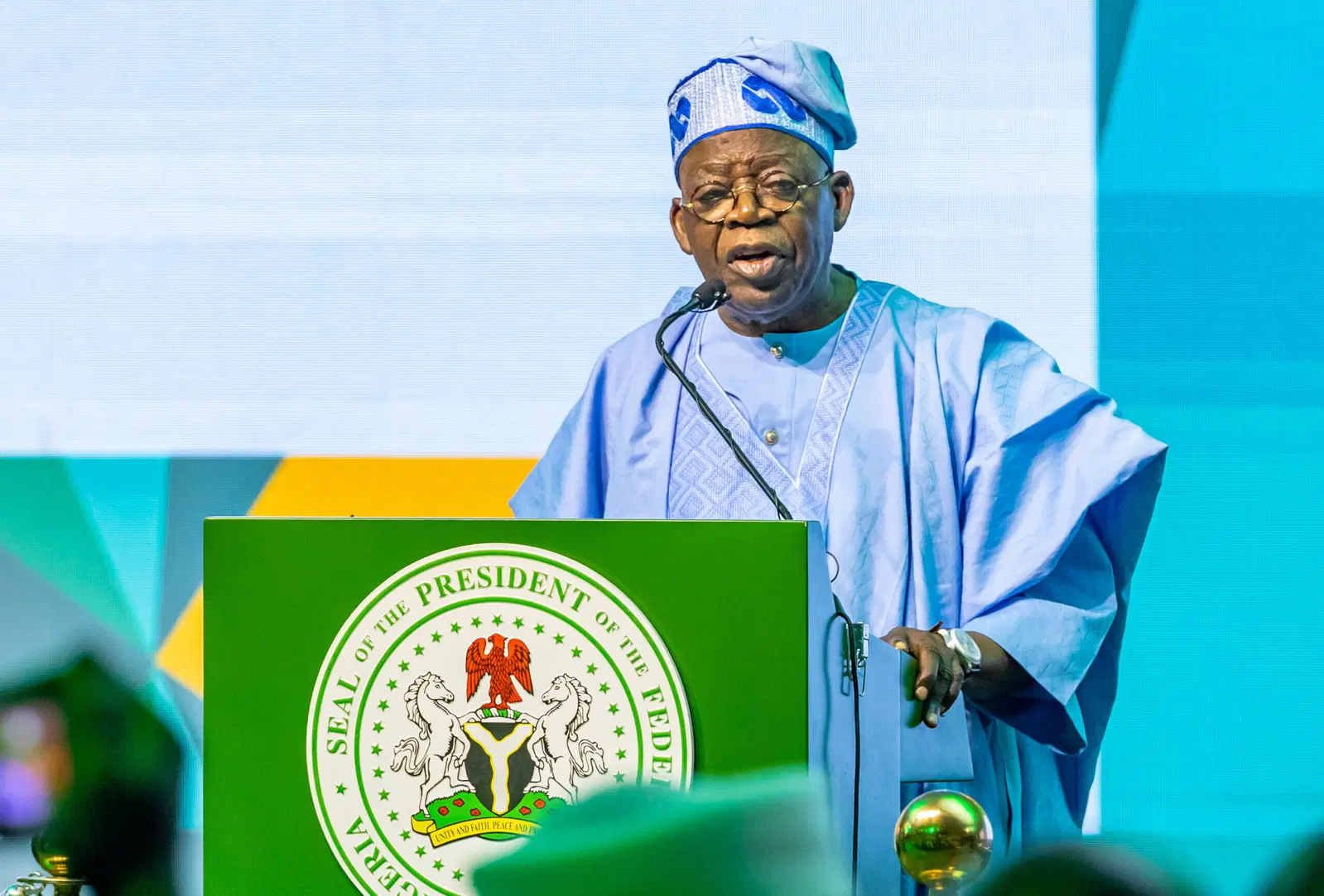


This Independence Day, we examine the Tinubu administration’s response to fraud and crime, weighing documented reforms against the everyday safety and trust Nigerians deserve.
Independence Must Also Mean the Freedom to Feel Safe
For a trader receiving payment, security means knowing that a credit alert is genuine. For a parent, it means a child returning safely from school. For a young Nigerian saving towards rent, it means an investment platform cannot disappear with years of sacrifice.
These are ordinary expectations of citizenship.
As Nigeria celebrates its 66th Independence Day, the government’s response to fraud and crime deserves a fair assessment: recognition where reforms have delivered, scrutiny where implementation remains uncertain, and attention to the people those policies exist to protect.
President Bola Tinubu’s administration has strengthened aspects of financial regulation, advanced data protection and announced additional security measures. Some results are measurable. Others remain commitments whose impact must still be demonstrated.
The central question is whether these changes make it harder to commit crime—and easier for victims to obtain help.
A Fair Assessment Must Recognise What Government Inherited
Nigeria’s anti-fraud infrastructure did not begin with the current administration.
The Bank Verification Number system, existing financial-crime agencies and earlier anti-money-laundering measures predate it. The CBN’s own account of BVN regulation records requirements and reforms stretching back well before 2023. Source: Central Bank of Nigeria
That distinction matters. Continuing an effective policy is valuable governance. But an honest assessment should separate inherited institutions, new measures and results achieved through the work of regulators, investigators, banks, courts and international partners.
Financial-Crime Reform Has Produced a Significant International Result
One of the clearest achievements during this administration came on 24 October 2025, when the Financial Action Task Force removed Nigeria from its list of jurisdictions under increased monitoring, commonly called the FATF grey list.
FATF recognised improvements including:
Stronger supervision of financial institutions and other regulated businesses.
Better access to information about the people who ultimately own companies.
Greater use of financial intelligence in investigations.
Increased money-laundering and terrorist-financing investigations and prosecutions.
Improved international cooperation.
These findings provide external recognition of institutional progress. Nigeria had entered increased monitoring in February 2023, before Tinubu took office. Source: FATF’s October 2025 assessment
For Nigerians, the importance is practical: criminals depend on moving, concealing and spending illicit money. Stronger financial controls can make those activities harder.
However, removal from the grey list is not a declaration that fraud has ended. It recognises improvements in specific financial-crime controls, rather than certifying every transaction or institution as safe.
Stronger Bank Identity Checks: Useful Protection With Limits
In December 2023, the CBN tightened identification requirements for bank accounts and wallets.
Its rules required BVN or NIN for individual Tier 1 accounts and wallets, while individual Tier 2 and Tier 3 accounts and wallets required both. The measures also strengthened electronic validation of identity information during account opening. Source: CBN
The policy addresses a basic weakness criminals exploit: financial accounts whose users cannot be reliably identified.
Yet identity checks are only one defence. A properly identified customer can still participate in fraud. A legitimate account can also be compromised or used to receive money on someone else’s behalf.
For an online buyer, an account name matching a seller’s name is helpful information. It is not sufficient evidence that the goods exist or will be delivered.
Effective fraud prevention requires banks to combine identification with transaction monitoring, responsive complaints handling and prompt investigation.
Reported Payment-Fraud Losses Fell, But the Numbers Need Context
There is an encouraging result in Nigeria’s payment system.
Figures published by the Nigeria Inter-Bank Settlement System show reported fraud losses falling from ₦52.26 billion in 2024 to ₦25.85 billion in 2025; roughly half the previous year’s amount. Source: NIBSS
That improvement deserves recognition. So does the fact that ₦25.85 billion remains a substantial loss.
These figures concern the payment-fraud reporting discussed by NIBSS. They should not be treated as a count of every scam, corruption offence or violent crime in Nigeria. Nor does a year-to-year decline, by itself, establish how much improvement came from any single government policy.
The next standard should be sustained reductions, faster intervention and clearer information about how much stolen money reaches victims again.
Investment-Fraud Rules Must Reach Nigerians Before Scammers Do
The Investments and Securities Act 2025, signed during the Tinubu administration, updated Nigeria’s capital-market framework. The legislation expressly addresses prohibited schemes, including Ponzi and pyramid schemes. Sources: SEC investor information, Investments and Securities Act 2025
But legislation must be supported by prevention.
In May 2026, the Securities and Exchange Commission warned about unregistered investment schemes being promoted through WhatsApp, Instagram, Telegram and other platforms. It urged Nigerians to check operators’ registration and avoid unrealistic or guaranteed returns. Source: SEC public warning
Consider a familiar scenario: someone joins an investment group because a colleague received an early payout. Screenshots circulate. Members are encouraged to recruit relatives. The pressure to invest grows.
An early payout does not establish legitimacy. Neither does a professional website or a company-registration certificate establish authorisation to offer regulated investments.
The government’s preventive work must reach people in the same places these schemes recruit them: social platforms, workplaces, markets and community networks.
Data Protection Is Part of Fraud Prevention
President Tinubu signed the Nigeria Data Protection Act on 12 June 2023, giving Nigeria a stronger statutory framework for protecting personal information. Source: NDPC annual report
The connection to fraud is direct. Personal information can help an impersonator sound convincing, target a victim or attempt account recovery.
The Act establishes obligations around personal-data processing and avenues for redress. The Nigeria Data Protection Commission’s mandate includes promoting lawful handling of information and safeguarding individuals’ rights. Source: NDPC
The policy test is practical: do organisations collect only what they need, protect what they hold and respond properly when something goes wrong?
Citizens should not have to trade away their privacy to participate in the digital economy.
Physical Security Requires More Than Recruitment Announcements
Fraud prevention cannot be separated from the wider demand for safety.
On 26 November 2025, President Tinubu announced a nationwide security emergency, authorised additional military and police recruitment, and directed the deployment of trained forest guards. The announcement raised the planned police recruitment total to 50,000 and addressed redeployment from VIP protection duties. Source: State House announcement
In August 2026, the President also ordered preparation of a national threat assessment and a rolling five-year defence operations plan, with submission required within 90 days. As of this Independence Day, that directive represents planning work—not evidence of completed results. Source: State House directive
More personnel and better coordination can support security. Their value depends on training, equipment, welfare, intelligence, deployment and accountability.
Nigerians should be able to see whether these measures produce safer journeys, fewer attacks, faster responses and better protection for vulnerable communities. An authorised recruitment figure is not the same as trained officers serving effectively on the ground.
Fighting Cybercrime Must Protect Democratic Rights
A government’s response to crime must also respect the freedoms independence is meant to secure.
Nigeria amended its Cybercrimes Act in 2024, narrowing the controversial Section 24. Nevertheless, the Committee to Protect Journalists documented further journalist detentions on cybercrime allegations in 2025 and raised concerns about continuing use of the law against the press. Source: CPJ
Those concerns belong in any serious assessment of anti-crime policy.
Journalists, whistleblowers and citizens can help expose misconduct. Investigations must distinguish criminal conduct from legitimate reporting and criticism, while respecting evidence, due process and access to legal representation.
Public trust grows when enforcement is both effective and fair.
What Nigerians Should Demand Before the Next Independence Day
A credible anti-fraud and crime strategy should publish results citizens can understand:
Victim outcomes: How many complaints resulted in assistance, recovery or restitution?
Response times: How quickly do institutions act after a fraud or security report?
Case outcomes: How many investigations reach court, and how are they resolved?
Public safety: Are serious offences declining in affected communities?
Accountability: Are officials and influential suspects investigated under the same standards?
Rights protection: Can people report wrongdoing without intimidation?
Arrest totals and recovery announcements provide information. They become more meaningful when accompanied by clear time periods, case outcomes and explanations of what happened to recovered assets.
Safer Habits Still Matter - Without Blaming Victims
Government and institutions carry responsibilities that citizens cannot replace. Personal precautions remain useful alongside those duties.
Before paying, investing or arranging a meeting:
Independently check identities and relevant authorisations.
Confirm investment operators through official SEC channels.
Verify payment in your own banking app rather than trusting screenshots.
Keep passwords, PINs and OTPs private.
Preserve evidence and report suspected fraud promptly through official channels.
Conclusion
At 66, Nigeria has reasons to recognise progress in financial-crime controls, payment security and data protection. The Tinubu administration should receive credit for documented improvements and face scrutiny over implementation, victim support, public safety and respect for rights.
Profiled Nigeria’s verification tools and SecureMeet solution support the everyday effort to combat fraud through identity checks and safer interactions. Their role complements the duty of public institutions to prevent crime, investigate fairly and protect citizens.
This Independence Day, the standard should be clear: Nigerians deserve policies that make trust safer, justice accessible and daily life less fearful.