October 16, 2026
October 16, 2026
How to Verify a Business Before Paying Them in Nigeria
The CAC certificate was real. The office photos were real. The money still vanished. Before you pay any supplier, contractor or platform, learn how to verify a business properly, layer by layer, so a borrowed name never takes your naira.
The CAC certificate was real. The office photos were real. The money still vanished. Before you pay any supplier, contractor or platform, learn how to verify a business properly, layer by layer, so a borrowed name never takes your naira.
Registration alone does not prove a business is safe to pay. This guide shows how to verify a business before paying, from licences to account names.
The CAC certificate was checked out. The office address was on Google Maps. The sales rep answered every call within seconds. And still, the money disappeared.
This is the uncomfortable truth about business fraud in Nigeria: scammers rarely invent businesses from nothing anymore. They borrow real ones. They copy a registered company's name and RC number onto a letterhead, then ask you to pay into an account that has nothing to do with that company. The registration was genuine. The payment instruction was not.
That is why checking a single document is no longer enough. To verify a business before paying, you need to check several layers, each of which closes a gap the others leave open. This guide walks you through all five, the red flags that should stop a transfer, and what to do if a payment has already gone wrong.
Why Business Payment Fraud Still Costs Nigerians Billions
There is some good news. NIBSS data reported in 2026 shows digital payment fraud losses fell 51% to ₦25.85 billion in 2025, down from ₦52.26 billion in 2024, with 67,518 fraud incidents recorded. But ₦25.85 billion is still a staggering sum, and the same data names e-commerce and internet banking as the most affected channels, with social engineering the leading technique.
Complaints tell a similar story. Between March and August 2025, the FCCPC said it resolved 9,091 consumer cases and recovered over ₦10 billion, with banking, consumer goods, fintech and e-commerce among the most complained-about sectors.
Then there are businesses that look legitimate but are not authorised to do what they do. In October 2026, the SEC disowned WayvePay, saying it was not registered to solicit investments from the public, after the platform advertised access to the Dangote Petroleum Refinery IPO. A professional advert in a newspaper did not make it authorised.
How Business Payment Scams Usually Work
Most scams that target people paying a business follow one of four patterns:
The borrowed identity. A fraudster uses a real company's name, RC number and logo on invoices or a website, but routes payment to their own account.
The hijacked invoice. You are dealing with a genuine supplier, but someone intercepts the conversation by email or WhatsApp and sends "updated bank details" just before payment.
The unlicensed operator. The business is registered with CAC, but it is not licensed for the regulated work it offers, such as investments, lending or certain health products.
The ghost premises. The address exists, but the business does not operate there. It is a shared office, a residential flat or someone else's building.
Consider Chinedu, who runs a small clinic in Abuja (an illustrative example). He finds a medical equipment supplier with a polished website and a valid RC number. The invoice for ₦2.4 million looks perfect. Only when his bank shows the beneficiary name does he notice it is an individual's name, not the company's. That single mismatch saves his money, because he stopped to check.
Red Flags Before You Pay a Business
Pause the payment if you notice any of these:
The account name does not match the registered business name.
Bank details change by message, especially close to payment day.
They demand full payment upfront, with no milestone or delivery terms.
Prices are far below what established competitors charge.
They offer guaranteed or unusually high returns on an investment.
They cannot name a physical address you can visit, or the address keeps changing.
Their RC number appears on documents but the details do not match the CAC record.
They avoid written contracts, official receipts or invoices on letterhead.
They pressure you with "limited slots", "price increases tomorrow" or similar urgency.
Their reviews are all recent, generic, or only appear on their own page.
How Do You Verify a Business Before Paying Them?
To verify a business before paying, confirm five layers: it is legally registered, it is licensed for the work it offers, the payment account belongs to the business, it has a real physical and human presence, and its reputation and paperwork hold up. If any layer fails, stop and ask questions before money moves.
Layer 1: Registration
Start with the Corporate Affairs Commission. Search the exact business name and compare the RC or BN number, registration date and status with what appears on their documents. Our step-by-step guide to the free CAC company search by name shows how to run the check and read the results. If you have an RC number from an invoice, follow our guide on how to verify a company by RC number and confirm every detail matches.
Layer 2: Licence and regulator
Registration only means a business exists. Many sectors also need a licence from a regulator. Before paying, ask which regulator oversees their work and check it yourself:
Investments and trading platforms: confirm registration with the SEC. In May 2026, the SEC warned about unregistered investment schemes promoted on WhatsApp, TikTok and Instagram and urged the public to check operators through its official portals.
Banks, lenders and microfinance: confirm the institution is licensed by the CBN.
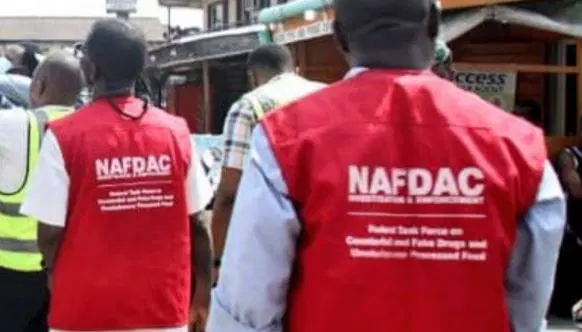
Food, drugs and cosmetics: confirm the product's NAFDAC registration.
Professional services: ask for membership numbers with the relevant professional body and confirm them directly.
Layer 3: The payment account
This is where most losses happen, so treat it as non-negotiable. Pay only into an account in the registered business name. Before a large transfer, send a small test amount and confirm the beneficiary name your bank displays. If bank details "change", call the business on a number you already had, not one in the new message, and confirm it with someone you have dealt with before.
Layer 4: Physical and human presence
Visit the address, or ask someone you trust in that city to stop by. Check whether the business actually operates there, not just whether the building exists. Find out who you are dealing with: a named staff member with a verifiable role is far safer than an anonymous "admin". Directors' names on the CAC record should make sense alongside the people you are speaking to.
Layer 5: Reputation and paper trail
Search the business name with words like "scam", "complaint" or "fraud". Look for reviews on independent platforms, not just their own page. Ask for references from past clients and call them. Insist on a written quotation, contract or invoice, and keep every receipt. If you also buy from social media sellers, our guide on how to know if a WhatsApp vendor is legit covers the checks specific to online shops.
Pay in a way that protects you
Even after verification, structure the payment to limit your exposure. For large jobs, pay in milestones tied to delivery. Use traceable channels such as bank transfers to company accounts or card payments, not cash handed to an agent. Keep the conversation, invoice and receipt together so you have a clear record if anything goes wrong.
Where Profiled Fits
The free checks above take time, and some gaps are hard to close alone, such as confirming who is really behind a business or whether its details are consistent across sources. Profiled Nigeria's business and vendor verification services bring those checks together, combining data intelligence, automated validation and human review to flag inconsistencies before you pay.
When the risk sits with the person, such as a sales rep, agent or director you are about to trust with money, iAMProfiled verifies identity, address, facial data, digital footprint and behavioural reliability, summed up in a PRODoT Score. No tool can promise zero risk, but verified information is a far better basis for payment than a confident sales pitch.
Before-You-Pay Business Checklist
Check | Safer sign | Stop sign |
CAC record | Name, RC number and status match their documents | No record, mismatched details or inactive status |
Licence | Confirmed directly with the regulator | "We're processing it" or no regulator named |
Account name | Matches the registered business name | Personal or unrelated account |
Bank details | Stable and confirmed by phone | Changed by message near payment day |
Address | Business visibly operates there | Empty, shared or constantly changing |
Paperwork | Written quote, contract and official receipt | Chats only, no documents |
Payment terms | Milestones or payment on delivery | Full payment upfront under time pressure |
What to Do If You Have Already Paid a Fake Business
Act quickly. The first hours matter most.
Call your bank's fraud line immediately. Give them the transaction details and ask them to flag and try to recall the transfer to the receiving account.
Stop all further payments. Ignore requests for "release fees", "clearance charges" or "tax" to unlock your order or refund.
Keep the evidence. Save chats, emails, invoices, receipts, adverts, website links and phone numbers. Do not delete anything.
Report online fraud to the police. File a report on the NPF National Cybercrime Centre's e-reporting portal, or visit the nearest police station.
File a consumer complaint. If you paid a real business that failed to deliver, the FCCPC accepts complaints through its official portal.
Alert others. Tell the regulator involved, such as the SEC for investment platforms, and warn your network so others do not fall for the same business.
Being scammed is not a sign of carelessness. These schemes are designed to look legitimate. Reporting quickly gives you the best chance of recovery and helps stop the next victim.
Frequently Asked Questions
How do I know if a business is legit in Nigeria before paying? Check five things: its CAC registration, any licence its sector requires, that the payment account is in the registered business name, that it genuinely operates at its stated address, and that independent reviews and references hold up. A legitimate business will not resist these checks. If any of them fails, pause the payment and ask questions.
Is a CAC certificate enough to trust a business? No. A CAC certificate proves a business is registered, not that it is honest, licensed for its work, or that the person contacting you represents it. Fraudsters often copy real companies' names and RC numbers. Always confirm the account name, licence and contact details match the genuine business.
Should I pay a business into a personal account? It is safest not to. Registered businesses should receive payments into accounts in their business name. A request to pay into a personal account is a common sign of impersonation or fraud. If you must, confirm the arrangement directly with the business through contact details you already trust, and get it in writing.
How do I check if an investment company is registered with the SEC? Use the SEC's official registration portals and databases rather than any link the company sends you. Check the exact company name and the services it is registered for. Be cautious of platforms promising guaranteed or unusually high returns, as the SEC has repeatedly warned about unregistered schemes promoted on social media.
What should I do if a business I paid disappears? Call your bank's fraud line at once and ask them to flag the receiving account. Preserve every chat, invoice and receipt. Report the fraud to the police through the NPF National Cybercrime Centre portal, and file a complaint with the FCCPC or the relevant regulator. Do not pay any "recovery" or "release" fees.
Conclusion
A real-looking business is not the same as a verified one. Registration, licences, account names, addresses and paper trails each tell you something different, and fraudsters only need you to skip one of them. Checking all five layers before you pay turns a hopeful transfer into an informed decision.
Profiled Nigeria's business verification services and identity checks help you close the gaps free searches leave open, so your money goes to businesses that are exactly who they say they are. Read real-world examples in our case studies.
Remember: a business is only as trustworthy as the account you are paying into.
Verify before you pay. Create your free Profiled account today.



Registration alone does not prove a business is safe to pay. This guide shows how to verify a business before paying, from licences to account names.
The CAC certificate was checked out. The office address was on Google Maps. The sales rep answered every call within seconds. And still, the money disappeared.
This is the uncomfortable truth about business fraud in Nigeria: scammers rarely invent businesses from nothing anymore. They borrow real ones. They copy a registered company's name and RC number onto a letterhead, then ask you to pay into an account that has nothing to do with that company. The registration was genuine. The payment instruction was not.
That is why checking a single document is no longer enough. To verify a business before paying, you need to check several layers, each of which closes a gap the others leave open. This guide walks you through all five, the red flags that should stop a transfer, and what to do if a payment has already gone wrong.
Why Business Payment Fraud Still Costs Nigerians Billions
There is some good news. NIBSS data reported in 2026 shows digital payment fraud losses fell 51% to ₦25.85 billion in 2025, down from ₦52.26 billion in 2024, with 67,518 fraud incidents recorded. But ₦25.85 billion is still a staggering sum, and the same data names e-commerce and internet banking as the most affected channels, with social engineering the leading technique.
Complaints tell a similar story. Between March and August 2025, the FCCPC said it resolved 9,091 consumer cases and recovered over ₦10 billion, with banking, consumer goods, fintech and e-commerce among the most complained-about sectors.
Then there are businesses that look legitimate but are not authorised to do what they do. In October 2026, the SEC disowned WayvePay, saying it was not registered to solicit investments from the public, after the platform advertised access to the Dangote Petroleum Refinery IPO. A professional advert in a newspaper did not make it authorised.
How Business Payment Scams Usually Work
Most scams that target people paying a business follow one of four patterns:
The borrowed identity. A fraudster uses a real company's name, RC number and logo on invoices or a website, but routes payment to their own account.
The hijacked invoice. You are dealing with a genuine supplier, but someone intercepts the conversation by email or WhatsApp and sends "updated bank details" just before payment.
The unlicensed operator. The business is registered with CAC, but it is not licensed for the regulated work it offers, such as investments, lending or certain health products.
The ghost premises. The address exists, but the business does not operate there. It is a shared office, a residential flat or someone else's building.
Consider Chinedu, who runs a small clinic in Abuja (an illustrative example). He finds a medical equipment supplier with a polished website and a valid RC number. The invoice for ₦2.4 million looks perfect. Only when his bank shows the beneficiary name does he notice it is an individual's name, not the company's. That single mismatch saves his money, because he stopped to check.
Red Flags Before You Pay a Business
Pause the payment if you notice any of these:
The account name does not match the registered business name.
Bank details change by message, especially close to payment day.
They demand full payment upfront, with no milestone or delivery terms.
Prices are far below what established competitors charge.
They offer guaranteed or unusually high returns on an investment.
They cannot name a physical address you can visit, or the address keeps changing.
Their RC number appears on documents but the details do not match the CAC record.
They avoid written contracts, official receipts or invoices on letterhead.
They pressure you with "limited slots", "price increases tomorrow" or similar urgency.
Their reviews are all recent, generic, or only appear on their own page.
How Do You Verify a Business Before Paying Them?
To verify a business before paying, confirm five layers: it is legally registered, it is licensed for the work it offers, the payment account belongs to the business, it has a real physical and human presence, and its reputation and paperwork hold up. If any layer fails, stop and ask questions before money moves.
Layer 1: Registration
Start with the Corporate Affairs Commission. Search the exact business name and compare the RC or BN number, registration date and status with what appears on their documents. Our step-by-step guide to the free CAC company search by name shows how to run the check and read the results. If you have an RC number from an invoice, follow our guide on how to verify a company by RC number and confirm every detail matches.
Layer 2: Licence and regulator
Registration only means a business exists. Many sectors also need a licence from a regulator. Before paying, ask which regulator oversees their work and check it yourself:
Investments and trading platforms: confirm registration with the SEC. In May 2026, the SEC warned about unregistered investment schemes promoted on WhatsApp, TikTok and Instagram and urged the public to check operators through its official portals.
Banks, lenders and microfinance: confirm the institution is licensed by the CBN.
Food, drugs and cosmetics: confirm the product's NAFDAC registration.
Professional services: ask for membership numbers with the relevant professional body and confirm them directly.
Layer 3: The payment account
This is where most losses happen, so treat it as non-negotiable. Pay only into an account in the registered business name. Before a large transfer, send a small test amount and confirm the beneficiary name your bank displays. If bank details "change", call the business on a number you already had, not one in the new message, and confirm it with someone you have dealt with before.
Layer 4: Physical and human presence
Visit the address, or ask someone you trust in that city to stop by. Check whether the business actually operates there, not just whether the building exists. Find out who you are dealing with: a named staff member with a verifiable role is far safer than an anonymous "admin". Directors' names on the CAC record should make sense alongside the people you are speaking to.
Layer 5: Reputation and paper trail
Search the business name with words like "scam", "complaint" or "fraud". Look for reviews on independent platforms, not just their own page. Ask for references from past clients and call them. Insist on a written quotation, contract or invoice, and keep every receipt. If you also buy from social media sellers, our guide on how to know if a WhatsApp vendor is legit covers the checks specific to online shops.
Pay in a way that protects you
Even after verification, structure the payment to limit your exposure. For large jobs, pay in milestones tied to delivery. Use traceable channels such as bank transfers to company accounts or card payments, not cash handed to an agent. Keep the conversation, invoice and receipt together so you have a clear record if anything goes wrong.
Where Profiled Fits
The free checks above take time, and some gaps are hard to close alone, such as confirming who is really behind a business or whether its details are consistent across sources. Profiled Nigeria's business and vendor verification services bring those checks together, combining data intelligence, automated validation and human review to flag inconsistencies before you pay.
When the risk sits with the person, such as a sales rep, agent or director you are about to trust with money, iAMProfiled verifies identity, address, facial data, digital footprint and behavioural reliability, summed up in a PRODoT Score. No tool can promise zero risk, but verified information is a far better basis for payment than a confident sales pitch.
Before-You-Pay Business Checklist
Check | Safer sign | Stop sign |
CAC record | Name, RC number and status match their documents | No record, mismatched details or inactive status |
Licence | Confirmed directly with the regulator | "We're processing it" or no regulator named |
Account name | Matches the registered business name | Personal or unrelated account |
Bank details | Stable and confirmed by phone | Changed by message near payment day |
Address | Business visibly operates there | Empty, shared or constantly changing |
Paperwork | Written quote, contract and official receipt | Chats only, no documents |
Payment terms | Milestones or payment on delivery | Full payment upfront under time pressure |
What to Do If You Have Already Paid a Fake Business
Act quickly. The first hours matter most.
Call your bank's fraud line immediately. Give them the transaction details and ask them to flag and try to recall the transfer to the receiving account.
Stop all further payments. Ignore requests for "release fees", "clearance charges" or "tax" to unlock your order or refund.
Keep the evidence. Save chats, emails, invoices, receipts, adverts, website links and phone numbers. Do not delete anything.
Report online fraud to the police. File a report on the NPF National Cybercrime Centre's e-reporting portal, or visit the nearest police station.
File a consumer complaint. If you paid a real business that failed to deliver, the FCCPC accepts complaints through its official portal.
Alert others. Tell the regulator involved, such as the SEC for investment platforms, and warn your network so others do not fall for the same business.
Being scammed is not a sign of carelessness. These schemes are designed to look legitimate. Reporting quickly gives you the best chance of recovery and helps stop the next victim.
Frequently Asked Questions
How do I know if a business is legit in Nigeria before paying? Check five things: its CAC registration, any licence its sector requires, that the payment account is in the registered business name, that it genuinely operates at its stated address, and that independent reviews and references hold up. A legitimate business will not resist these checks. If any of them fails, pause the payment and ask questions.
Is a CAC certificate enough to trust a business? No. A CAC certificate proves a business is registered, not that it is honest, licensed for its work, or that the person contacting you represents it. Fraudsters often copy real companies' names and RC numbers. Always confirm the account name, licence and contact details match the genuine business.
Should I pay a business into a personal account? It is safest not to. Registered businesses should receive payments into accounts in their business name. A request to pay into a personal account is a common sign of impersonation or fraud. If you must, confirm the arrangement directly with the business through contact details you already trust, and get it in writing.
How do I check if an investment company is registered with the SEC? Use the SEC's official registration portals and databases rather than any link the company sends you. Check the exact company name and the services it is registered for. Be cautious of platforms promising guaranteed or unusually high returns, as the SEC has repeatedly warned about unregistered schemes promoted on social media.
What should I do if a business I paid disappears? Call your bank's fraud line at once and ask them to flag the receiving account. Preserve every chat, invoice and receipt. Report the fraud to the police through the NPF National Cybercrime Centre portal, and file a complaint with the FCCPC or the relevant regulator. Do not pay any "recovery" or "release" fees.
Conclusion
A real-looking business is not the same as a verified one. Registration, licences, account names, addresses and paper trails each tell you something different, and fraudsters only need you to skip one of them. Checking all five layers before you pay turns a hopeful transfer into an informed decision.
Profiled Nigeria's business verification services and identity checks help you close the gaps free searches leave open, so your money goes to businesses that are exactly who they say they are. Read real-world examples in our case studies.
Remember: a business is only as trustworthy as the account you are paying into.
Verify before you pay. Create your free Profiled account today.