September 26, 2026
September 26, 2026
EFCC–NELFUND Deal: What Nigerian Students Must Verify Before Paying
News of recovered funds supporting student loans offers hope to Nigerian families. But fake portals and convincing impersonators can turn that hope into financial loss. Understand the EFCC–NELFUND deal, protect your personal information, and verify every payment demand before acting.
News of recovered funds supporting student loans offers hope to Nigerian families. But fake portals and convincing impersonators can turn that hope into financial loss. Understand the EFCC–NELFUND deal, protect your personal information, and verify every payment demand before acting.
The EFCC–NELFUND agreement aims to strengthen student financing and accountability. Here is what it means for Nigerian applicants and how to recognise fraudulent assistance.
What Is the EFCC–NELFUND Deal?
The Economic and Financial Crimes Commission and the Nigerian Education Loan Fund signed a Memorandum of Understanding in Abuja on September 23, 2026.
The agreement aims to strengthen cooperation around eligible recovered funds, improve information sharing, and close weaknesses that could allow money intended for education to be diverted. It connects the recovery of proceeds of crime with efforts to sustain student-loan financing. Source: The Guardian
For students and parents, the potential benefit is stronger financial support backed by better oversight. However, signing an agreement does not automatically mean that every applicant has been approved or that a new payment is ready for collection.
Understanding that distinction can help families recognise misleading offers.
How Much Money Is Involved?
The relationship between EFCC recoveries and student-loan funding began before this agreement.
In August 2024, NELFUND acknowledged receiving ₦50 billion from recovered proceeds of crime following a presidential directive. Source: Channels Television
In September 2026, EFCC Chairman Ola Olukoyede was reported as saying that ₦100 billion had been allocated to NELFUND across 2024 and 2026, comprising ₦50 billion approved in each year. Source: TheCable
These figures describe different stages of public funding:
Approval or allocation: Money has been authorised for a purpose.
Receipt: NELFUND has actually received the money.
Disbursement: Funds have been paid for approved student benefits.
The September agreement should not be presented as proof that another ₦100 billion has just reached students.
Does the Agreement Guarantee Your Student Loan?
The published accounts of the agreement do not establish automatic approval, a universal increase in upkeep payments, or a new application process run by EFCC.
NELFUND’s official website describes an application process followed by verification. It also explains that approved payments have different destinations:
Loan component | Payment destination |
|---|---|
Institutional charges | The student’s institution |
Upkeep loan | The bank account provided in the student’s profile |
This means a headline about money reaching beneficiaries does not establish that all loan funding will enter students’ personal accounts. Source: NELFUND’s official website
Check your own application through the official system. A forwarded beneficiary list, social-media comment or stranger’s assurance cannot replace confirmation of your application status.
Fake NELFUND Portals Are a Documented Risk
Fraudsters have already used the NELFUND name to mislead applicants.
In April 2026, NELFUND warned about a fake registration portal promoted through a message claiming that the President had ordered a new registration opportunity. The message offered supposed access to loan applications and cash transfers. Source: Business A.M’s report of NELFUND’s warning
That earlier warning matters now because genuine government news can make a false message appear believable.
An EFCC logo, a photograph of government officials or a reference to recovered funds does not authenticate a website. Confirm the destination independently before entering personal information.
Start from the official NELFUND website or its student application portal.
Five Warning Signs Students Should Recognise
The following are illustrative warning signs, not claims that a new scam campaign has been confirmed under the agreement.
1. An “EFCC Clearance Fee” to Release Your Loan
Imagine a student in Ilorin receiving a WhatsApp message claiming that a small clearance payment will unlock their NELFUND upkeep allowance.
The message includes an official-looking letter and a personal bank account.
Before paying, the student should independently confirm whether the requirement exists. The published agreement does not establish a student clearance fee.
2. A New Portal Sent Through an Unsolicited Message
Be cautious when a message claims that the usual portal has been replaced or that only a special link provides access to recovered funds.
Open the official website yourself. Do not rely on a familiar logo or the word “NELFUND” appearing somewhere in a website address.
3. Guaranteed Approval Through an Insider
A person may claim to work with EFCC, NELFUND or your school’s bursary department.
Confirm their role using contact details obtained independently from the institution. A staff-card photograph or knowledge of your school does not prove authority over your application.
4. Requests for Passwords or OTPs
Keep your account password and one-time authentication codes private.
A legitimate application may require identity information through its official process. That does not justify sending your NIN, BVN, password or OTP to an unsolicited caller or chat contact.
5. Pressure to Pay Before a Sudden Deadline
Statements such as “your slot expires in ten minutes” discourage careful checking.
Pause. Ask for the official notice and verify it independently. A genuine announcement should remain verifiable outside the conversation with the person requesting money.
How to Verify Someone Offering NELFUND Assistance
Before trusting an unfamiliar adviser, answer three separate questions:
Who is this person? Establish their identity.
Who do they represent? Confirm their relationship with the organisation they name.
Are they authorised to provide this service? Verify the specific claim directly with that organisation.
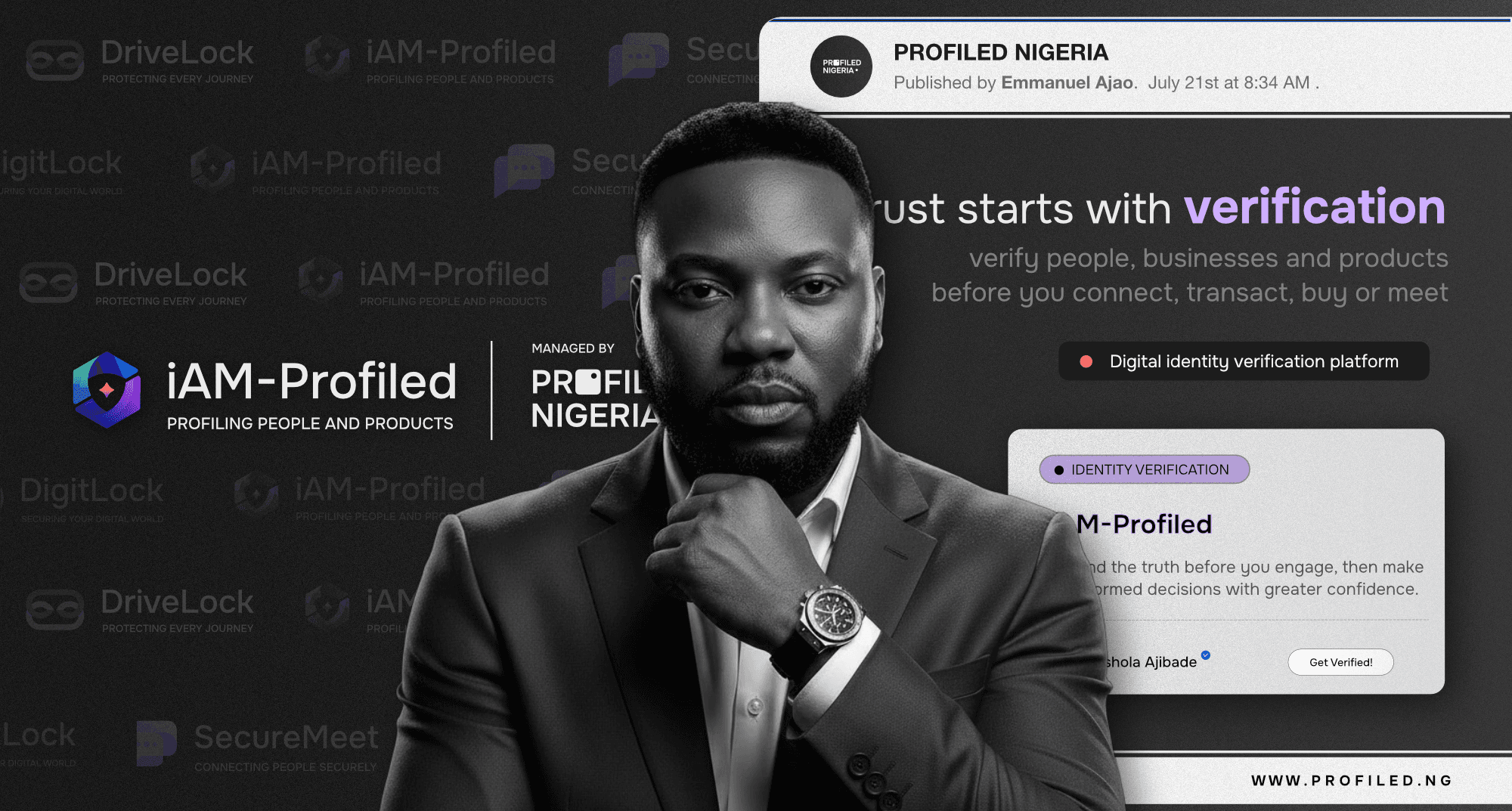
Profiled Nigeria’s verification tools can help users examine identity and business claims before committing money or trust.
However, a confirmed identity does not prove that someone can approve a student loan. Institutional authority must still be checked with NELFUND or the relevant school.
Where a conversation with an unfamiliar adviser needs to progress to a meeting, SecureMeet can support safer engagement. It is an additional precaution, not a requirement for applying for a government loan.
What to Do About a Suspicious Payment Demand
Keep screenshots of the message, sender’s details, payment instructions and any claimed official notice.
Then:
Check your application through the official portal.
Contact NELFUND through channels reached from its official website.
Ask your institution for a written explanation of any disputed school charge.
Avoid posting your identity documents or unredacted application records publicly.
If you have transferred money to a suspected fraudster, contact your bank promptly and preserve the transaction reference.
A payment delay deserves investigation, but it does not by itself prove theft. Likewise, an investigation should not be reported as a conviction.
That distinction has particular relevance here: in May 2025, ICPC corrected an earlier statement that had wrongly suggested discrepancies or diversion in the student-loan scheme were already established. The commission said investigations were continuing at that time. Read ICPC’s official clarification
For more practical guidance on evaluating unfamiliar contacts, visit the Profiled Nigeria safety blog.
7. Conclusion
The EFCC–NELFUND agreement could strengthen student financing and accountability. Its value will depend on eligible funds being transferred, properly managed and used for approved student benefits.
For applicants, the immediate protection is practical: use official portals, keep control of your credentials, and independently verify anyone requesting money or claiming influence over your loan.
Profiled Nigeria’s verification tools help you examine identity and business claims, while SecureMeet supports safer interactions with unfamiliar contacts. Combine those safeguards with direct institutional confirmation.
Your education is too important to entrust to an unverified promise.


The EFCC–NELFUND agreement aims to strengthen student financing and accountability. Here is what it means for Nigerian applicants and how to recognise fraudulent assistance.
What Is the EFCC–NELFUND Deal?
The Economic and Financial Crimes Commission and the Nigerian Education Loan Fund signed a Memorandum of Understanding in Abuja on September 23, 2026.
The agreement aims to strengthen cooperation around eligible recovered funds, improve information sharing, and close weaknesses that could allow money intended for education to be diverted. It connects the recovery of proceeds of crime with efforts to sustain student-loan financing. Source: The Guardian
For students and parents, the potential benefit is stronger financial support backed by better oversight. However, signing an agreement does not automatically mean that every applicant has been approved or that a new payment is ready for collection.
Understanding that distinction can help families recognise misleading offers.
How Much Money Is Involved?
The relationship between EFCC recoveries and student-loan funding began before this agreement.
In August 2024, NELFUND acknowledged receiving ₦50 billion from recovered proceeds of crime following a presidential directive. Source: Channels Television
In September 2026, EFCC Chairman Ola Olukoyede was reported as saying that ₦100 billion had been allocated to NELFUND across 2024 and 2026, comprising ₦50 billion approved in each year. Source: TheCable
These figures describe different stages of public funding:
Approval or allocation: Money has been authorised for a purpose.
Receipt: NELFUND has actually received the money.
Disbursement: Funds have been paid for approved student benefits.
The September agreement should not be presented as proof that another ₦100 billion has just reached students.
Does the Agreement Guarantee Your Student Loan?
The published accounts of the agreement do not establish automatic approval, a universal increase in upkeep payments, or a new application process run by EFCC.
NELFUND’s official website describes an application process followed by verification. It also explains that approved payments have different destinations:
Loan component | Payment destination |
|---|---|
Institutional charges | The student’s institution |
Upkeep loan | The bank account provided in the student’s profile |
This means a headline about money reaching beneficiaries does not establish that all loan funding will enter students’ personal accounts. Source: NELFUND’s official website
Check your own application through the official system. A forwarded beneficiary list, social-media comment or stranger’s assurance cannot replace confirmation of your application status.
Fake NELFUND Portals Are a Documented Risk
Fraudsters have already used the NELFUND name to mislead applicants.
In April 2026, NELFUND warned about a fake registration portal promoted through a message claiming that the President had ordered a new registration opportunity. The message offered supposed access to loan applications and cash transfers. Source: Business A.M’s report of NELFUND’s warning
That earlier warning matters now because genuine government news can make a false message appear believable.
An EFCC logo, a photograph of government officials or a reference to recovered funds does not authenticate a website. Confirm the destination independently before entering personal information.
Start from the official NELFUND website or its student application portal.
Five Warning Signs Students Should Recognise
The following are illustrative warning signs, not claims that a new scam campaign has been confirmed under the agreement.
1. An “EFCC Clearance Fee” to Release Your Loan
Imagine a student in Ilorin receiving a WhatsApp message claiming that a small clearance payment will unlock their NELFUND upkeep allowance.
The message includes an official-looking letter and a personal bank account.
Before paying, the student should independently confirm whether the requirement exists. The published agreement does not establish a student clearance fee.
2. A New Portal Sent Through an Unsolicited Message
Be cautious when a message claims that the usual portal has been replaced or that only a special link provides access to recovered funds.
Open the official website yourself. Do not rely on a familiar logo or the word “NELFUND” appearing somewhere in a website address.
3. Guaranteed Approval Through an Insider
A person may claim to work with EFCC, NELFUND or your school’s bursary department.
Confirm their role using contact details obtained independently from the institution. A staff-card photograph or knowledge of your school does not prove authority over your application.
4. Requests for Passwords or OTPs
Keep your account password and one-time authentication codes private.
A legitimate application may require identity information through its official process. That does not justify sending your NIN, BVN, password or OTP to an unsolicited caller or chat contact.
5. Pressure to Pay Before a Sudden Deadline
Statements such as “your slot expires in ten minutes” discourage careful checking.
Pause. Ask for the official notice and verify it independently. A genuine announcement should remain verifiable outside the conversation with the person requesting money.
How to Verify Someone Offering NELFUND Assistance
Before trusting an unfamiliar adviser, answer three separate questions:
Who is this person? Establish their identity.
Who do they represent? Confirm their relationship with the organisation they name.
Are they authorised to provide this service? Verify the specific claim directly with that organisation.
Profiled Nigeria’s verification tools can help users examine identity and business claims before committing money or trust.
However, a confirmed identity does not prove that someone can approve a student loan. Institutional authority must still be checked with NELFUND or the relevant school.
Where a conversation with an unfamiliar adviser needs to progress to a meeting, SecureMeet can support safer engagement. It is an additional precaution, not a requirement for applying for a government loan.
What to Do About a Suspicious Payment Demand
Keep screenshots of the message, sender’s details, payment instructions and any claimed official notice.
Then:
Check your application through the official portal.
Contact NELFUND through channels reached from its official website.
Ask your institution for a written explanation of any disputed school charge.
Avoid posting your identity documents or unredacted application records publicly.
If you have transferred money to a suspected fraudster, contact your bank promptly and preserve the transaction reference.
A payment delay deserves investigation, but it does not by itself prove theft. Likewise, an investigation should not be reported as a conviction.
That distinction has particular relevance here: in May 2025, ICPC corrected an earlier statement that had wrongly suggested discrepancies or diversion in the student-loan scheme were already established. The commission said investigations were continuing at that time. Read ICPC’s official clarification
For more practical guidance on evaluating unfamiliar contacts, visit the Profiled Nigeria safety blog.
7. Conclusion
The EFCC–NELFUND agreement could strengthen student financing and accountability. Its value will depend on eligible funds being transferred, properly managed and used for approved student benefits.
For applicants, the immediate protection is practical: use official portals, keep control of your credentials, and independently verify anyone requesting money or claiming influence over your loan.
Profiled Nigeria’s verification tools help you examine identity and business claims, while SecureMeet supports safer interactions with unfamiliar contacts. Combine those safeguards with direct institutional confirmation.
Your education is too important to entrust to an unverified promise.