September 30, 2026
September 30, 2026
Digital Trust in Nigeria: Why Fraud Prevention Cannot Wait
Every suspicious payment request forces Nigerians to make a difficult choice: trust a stranger or lose an opportunity. Fraud exploits that uncertainty. Emmanuel Ajao, co-founder of Profiled Nigeria, explains why verification must become an everyday habit - and a foundation for Nigeria’s digital economy.
Every suspicious payment request forces Nigerians to make a difficult choice: trust a stranger or lose an opportunity. Fraud exploits that uncertainty. Emmanuel Ajao, co-founder of Profiled Nigeria, explains why verification must become an everyday habit - and a foundation for Nigeria’s digital economy.
Digital trust in Nigeria affects how we trade, work, and connect. Preventing fraud requires accessible verification, accountable businesses, and better decisions before money changes hands.
Nigeria’s Digital Economy Depends on Everyday Trust
Before a customer transfers money to an Instagram vendor, a question hangs in the air: Will this person deliver?
Before a job seeker shares personal information with a recruiter, another follows: Is this opportunity real?
These questions shape ordinary digital life in Nigeria. Behind every online transaction is a decision about whether someone deserves our confidence.
As co-founder of Profiled Nigeria, I believe making those decisions safer is a responsibility that technology businesses must take seriously. People need practical ways to check identities, assess claims, and recognise uncertainty before they commit their money or personal information.
Digital trust means having reasonable grounds to believe that a person, business, or service is what it claims to be - and that there is accountability when something goes wrong.
What Nigeria’s Fraud Figures Tell Us
The financial cost remains substantial, even as reported losses improve.
In a February 2026 update, the Nigeria Inter-Bank Settlement System reported:
₦25.85 billion lost to fraud in 2025, compared with ₦52.26 billion in 2024.
67,515 reported fraud cases in 2025, down from 123,918 in 2021.
These figures describe reported payment-sector fraud; they should not be mistaken for a complete measure of every online scam or its wider consequences.
The decline is encouraging. However, billions of Naira in remaining losses make clear that fraud prevention in Nigeria still requires sustained attention.
There is also a cost that a payment-loss figure cannot fully capture: the legitimate vendor who loses customers because buyers fear being scammed, or the person who stops pursuing online opportunities after a painful experience.
Fraud damages confidence beyond the original transaction.
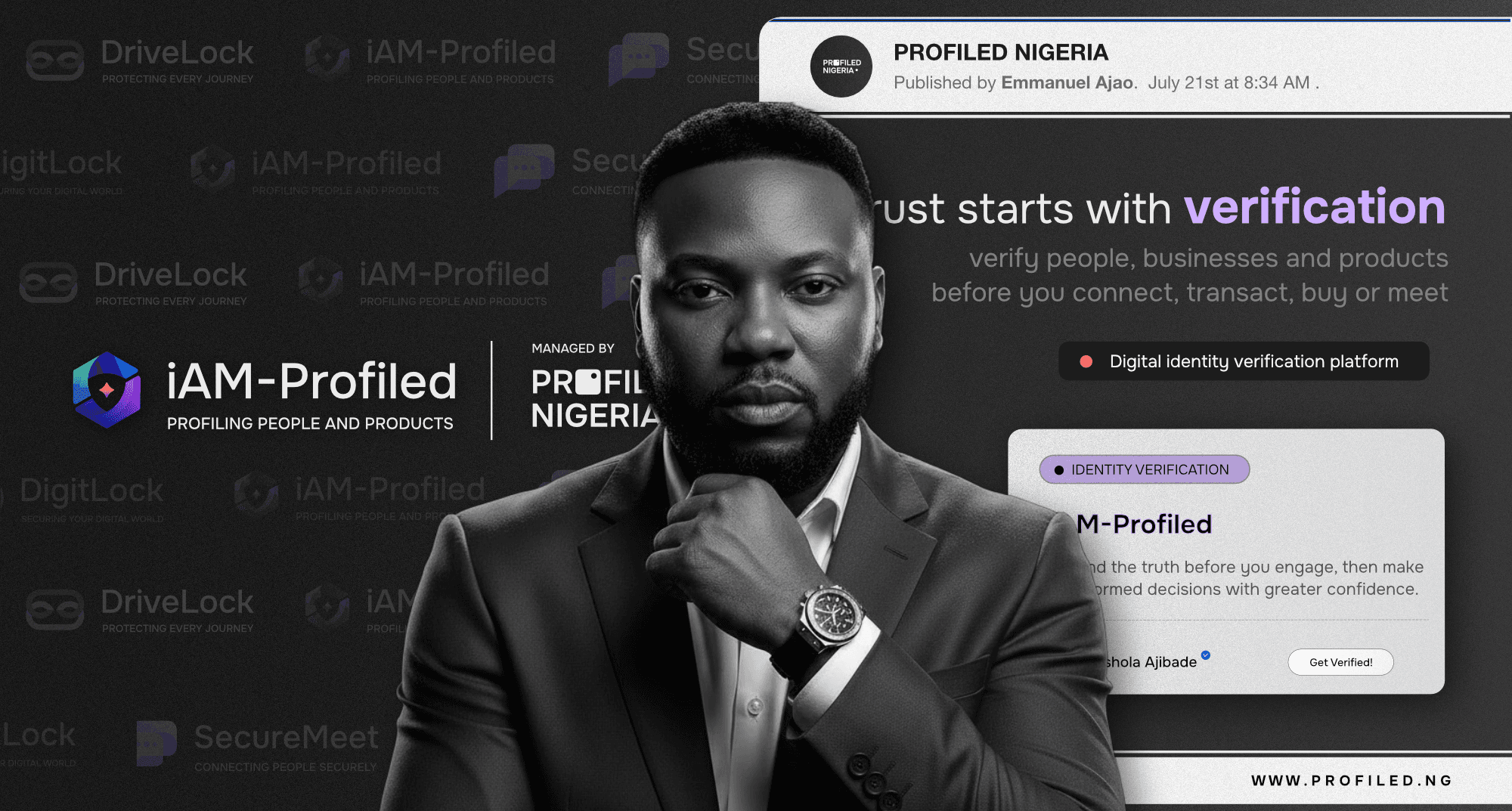
Why This Mission Is Personal to My Work
My professional background includes cyber defence and forensics analysis, as documented in a February 2026 TechCabal profile. That experience informs the perspective I bring to Profiled Nigeria: trust should be supported by evidence people can use before taking a risk.
For me, leadership in this space means helping people ask better questions:
What has actually been verified?
Does the verification relate to the person contacting me?
What remains unknown about this transaction?
What should make me pause?
My responsibility as a co-founder is to connect our mission to these everyday decisions. A verification tool becomes useful when a customer understands what its result means and how to act on it.
That is the standard I believe digital trust businesses should meet: clear evidence, understandable limitations, and practical protection.
How Fraud Turns Familiarity Into False Confidence
Consider an illustrative scenario.
A buyer in Ibadan finds a phone seller on Instagram. The page has attractive photographs, positive comments, and thousands of followers. On WhatsApp, the seller sounds professional and promises immediate dispatch.
Then comes the pressure: “Another customer is ready. Transfer now so I can reserve it.”
The buyer has seen signs of popularity. They still need evidence connecting the seller, the product, and the payment recipient.
Similar gaps can appear when:
A recruiter uses a recognised company’s logo without proving they represent it.
A property agent advertises an apartment without demonstrating authority to let it.
Someone using a familiar contact’s account requests an urgent transfer.
A supposed business representative supplies bank details that do not match the agreed transaction.
The practical lesson is to check the claim that matters. Confirming that a company exists does not establish that the person messaging you works there. Confirming someone’s identity does not establish that they own the goods they are selling.
Verification Must Answer More Than “Is This Person Real?”
Effective identity verification in Nigeria should support a broader assessment of risk.
Verify the person. Establish who you are dealing with through appropriate, trusted channels.
Verify their authority. Confirm that they represent the business, employer, property owner, or organisation they claim to represent.
Verify the transaction. Check the item or service, recipient details, delivery terms, and any last-minute changes.
Verify the meeting arrangements. Consider the location, purpose, and safeguards before meeting someone first encountered online.
A verified identity is useful evidence. It cannot guarantee honest intentions, product quality, or future behaviour. Understanding that distinction helps people use verification more effectively.
For more guidance, read Profiled Nigeria’s articles on verifying a company in Nigeria and checking an Instagram vendor before paying.
Turning Profiled Nigeria’s Mission Into Everyday Protection
Profiled Nigeria’s mission is to help restore confidence in digital interactions by making verification and accountability easier to access.
Our approach centres on identity verification, profile validation, and information that helps people assess who they are dealing with. SecureMeet extends that focus to safer interactions with people encountered online. Profiled Nigeria’s vendor safety guidance explains how identity checks and safer meeting arrangements fit into the same decision.
These tools are most valuable when used before a commitment: before payment, before sensitive information is shared, and before an unfamiliar meeting.
As co-founder, I believe we should also hold ourselves to the standards we encourage others to adopt. Verification services should explain what they check, handle personal information responsibly, and avoid presenting any result as a promise of complete safety.
Credibility grows when the evidence and the claims match.
Five Habits That Strengthen Digital Trust
Every Nigerian can make verification part of daily digital life.
Pause when urgency replaces evidence. A deadline does not remove the need to check an unfamiliar seller or request.
Confirm through an independent channel. Contact a company or familiar person using details you already trust or source independently.
Check payment details carefully. Resolve unexpected recipient names or changed bank details before transferring money.
Protect access to your accounts. Do not disclose passwords, PINs, or one-time codes to someone offering assistance or requesting “verification.”
Keep records and plan safer meetings. Save agreed terms and receipts. For physical meetings, choose an appropriate public location and let someone you trust know your plans.
Businesses have a role too. Clear contact information, consistent business details, transparent terms, and respectful responses to verification requests make it easier for customers to act confidently.
A customer asking reasonable questions is helping establish a safer transaction.
Conclusion
Nigeria’s digital economy needs confidence grounded in evidence. Reducing fraud means making it easier for people to verify claims before trust becomes a financial or personal risk.
As Emmanuel Ajao, co-founder of Profiled Nigeria, this is the responsibility I connect to our mission: helping Nigerians make informed decisions about who they pay, engage, and meet.
Profiled Nigeria’s verification tools support identity and credibility checks, while SecureMeet helps users approach meetings with greater attention to verification and safety. Combined with careful payment habits and independent checks, these tools can reduce opportunities for deception.
Before your next transaction, make room for one essential step: verify. Explore the Profiled Nigeria blog and make safer digital decisions part of your everyday routine.


Digital trust in Nigeria affects how we trade, work, and connect. Preventing fraud requires accessible verification, accountable businesses, and better decisions before money changes hands.
Nigeria’s Digital Economy Depends on Everyday Trust
Before a customer transfers money to an Instagram vendor, a question hangs in the air: Will this person deliver?
Before a job seeker shares personal information with a recruiter, another follows: Is this opportunity real?
These questions shape ordinary digital life in Nigeria. Behind every online transaction is a decision about whether someone deserves our confidence.
As co-founder of Profiled Nigeria, I believe making those decisions safer is a responsibility that technology businesses must take seriously. People need practical ways to check identities, assess claims, and recognise uncertainty before they commit their money or personal information.
Digital trust means having reasonable grounds to believe that a person, business, or service is what it claims to be - and that there is accountability when something goes wrong.
What Nigeria’s Fraud Figures Tell Us
The financial cost remains substantial, even as reported losses improve.
In a February 2026 update, the Nigeria Inter-Bank Settlement System reported:
₦25.85 billion lost to fraud in 2025, compared with ₦52.26 billion in 2024.
67,515 reported fraud cases in 2025, down from 123,918 in 2021.
These figures describe reported payment-sector fraud; they should not be mistaken for a complete measure of every online scam or its wider consequences.
The decline is encouraging. However, billions of Naira in remaining losses make clear that fraud prevention in Nigeria still requires sustained attention.
There is also a cost that a payment-loss figure cannot fully capture: the legitimate vendor who loses customers because buyers fear being scammed, or the person who stops pursuing online opportunities after a painful experience.
Fraud damages confidence beyond the original transaction.
Why This Mission Is Personal to My Work
My professional background includes cyber defence and forensics analysis, as documented in a February 2026 TechCabal profile. That experience informs the perspective I bring to Profiled Nigeria: trust should be supported by evidence people can use before taking a risk.
For me, leadership in this space means helping people ask better questions:
What has actually been verified?
Does the verification relate to the person contacting me?
What remains unknown about this transaction?
What should make me pause?
My responsibility as a co-founder is to connect our mission to these everyday decisions. A verification tool becomes useful when a customer understands what its result means and how to act on it.
That is the standard I believe digital trust businesses should meet: clear evidence, understandable limitations, and practical protection.
How Fraud Turns Familiarity Into False Confidence
Consider an illustrative scenario.
A buyer in Ibadan finds a phone seller on Instagram. The page has attractive photographs, positive comments, and thousands of followers. On WhatsApp, the seller sounds professional and promises immediate dispatch.
Then comes the pressure: “Another customer is ready. Transfer now so I can reserve it.”
The buyer has seen signs of popularity. They still need evidence connecting the seller, the product, and the payment recipient.
Similar gaps can appear when:
A recruiter uses a recognised company’s logo without proving they represent it.
A property agent advertises an apartment without demonstrating authority to let it.
Someone using a familiar contact’s account requests an urgent transfer.
A supposed business representative supplies bank details that do not match the agreed transaction.
The practical lesson is to check the claim that matters. Confirming that a company exists does not establish that the person messaging you works there. Confirming someone’s identity does not establish that they own the goods they are selling.
Verification Must Answer More Than “Is This Person Real?”
Effective identity verification in Nigeria should support a broader assessment of risk.
Verify the person. Establish who you are dealing with through appropriate, trusted channels.
Verify their authority. Confirm that they represent the business, employer, property owner, or organisation they claim to represent.
Verify the transaction. Check the item or service, recipient details, delivery terms, and any last-minute changes.
Verify the meeting arrangements. Consider the location, purpose, and safeguards before meeting someone first encountered online.
A verified identity is useful evidence. It cannot guarantee honest intentions, product quality, or future behaviour. Understanding that distinction helps people use verification more effectively.
For more guidance, read Profiled Nigeria’s articles on verifying a company in Nigeria and checking an Instagram vendor before paying.
Turning Profiled Nigeria’s Mission Into Everyday Protection
Profiled Nigeria’s mission is to help restore confidence in digital interactions by making verification and accountability easier to access.
Our approach centres on identity verification, profile validation, and information that helps people assess who they are dealing with. SecureMeet extends that focus to safer interactions with people encountered online. Profiled Nigeria’s vendor safety guidance explains how identity checks and safer meeting arrangements fit into the same decision.
These tools are most valuable when used before a commitment: before payment, before sensitive information is shared, and before an unfamiliar meeting.
As co-founder, I believe we should also hold ourselves to the standards we encourage others to adopt. Verification services should explain what they check, handle personal information responsibly, and avoid presenting any result as a promise of complete safety.
Credibility grows when the evidence and the claims match.
Five Habits That Strengthen Digital Trust
Every Nigerian can make verification part of daily digital life.
Pause when urgency replaces evidence. A deadline does not remove the need to check an unfamiliar seller or request.
Confirm through an independent channel. Contact a company or familiar person using details you already trust or source independently.
Check payment details carefully. Resolve unexpected recipient names or changed bank details before transferring money.
Protect access to your accounts. Do not disclose passwords, PINs, or one-time codes to someone offering assistance or requesting “verification.”
Keep records and plan safer meetings. Save agreed terms and receipts. For physical meetings, choose an appropriate public location and let someone you trust know your plans.
Businesses have a role too. Clear contact information, consistent business details, transparent terms, and respectful responses to verification requests make it easier for customers to act confidently.
A customer asking reasonable questions is helping establish a safer transaction.
Conclusion
Nigeria’s digital economy needs confidence grounded in evidence. Reducing fraud means making it easier for people to verify claims before trust becomes a financial or personal risk.
As Emmanuel Ajao, co-founder of Profiled Nigeria, this is the responsibility I connect to our mission: helping Nigerians make informed decisions about who they pay, engage, and meet.
Profiled Nigeria’s verification tools support identity and credibility checks, while SecureMeet helps users approach meetings with greater attention to verification and safety. Combined with careful payment habits and independent checks, these tools can reduce opportunities for deception.
Before your next transaction, make room for one essential step: verify. Explore the Profiled Nigeria blog and make safer digital decisions part of your everyday routine.